

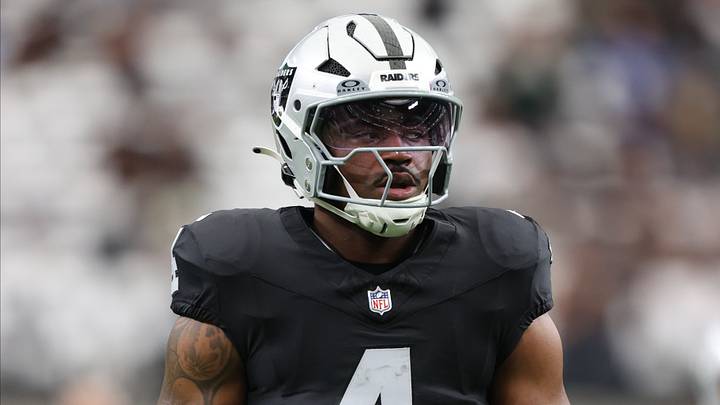
After weeks of struggles, this side of a notable passing game role, Las Vegas Raiders running back Ashton Jeanty had 169 yards from scrimmage against the Denver Broncos in Week 11. Yes, 114 of those yards came on a 68-yard touchdown reception and a 46-yard run, but beggars for Jeanty to show what made him the top running back in the 2025 draft class can't be choosers.
Jeanty showed more juice than he has as a runner in weeks, though, and his usage in the passing game was an exercise in versatility and effectiveness.
Since the low point of two carries in Week 8 against the New York Jets, Jeanty has had 45 opportunities (carries plus targets) compared to Mike Washington Jr.'s 24. He has also averaged 4.7 yards per carry over that span, to Washington's 2.7.
Still, starting with Week 6 and going through Week 10, Jeanty and Washington shared non-passing down work nearly equally.
Against the Broncos in Week 11, Jeanty played 59 snaps to Washington's 15. With 70 total offensive snaps for the Raiders, that, of course, means they were on the field at the same time a few times. According to Pro Football Focus' Nathan Jahnke, Jeanty had a 2-to-1 edge (18 vs. 9) over Washington in early down snaps when the two weren't on the field together in those situations.
As the Raiders have discovered this perfect running back split, though, one issue remains: Washington Jr.'s viability in the passing game.
Raiders' ideal running back rotation has a big tell until further notice
In his 15 snaps against the Broncos in Week 11, Washington had nine carries for 42 yards with three routes run (zero targets).
Jahnke dove a little deeper in his analysis of the Raiders' running back rotation against Denver.
"The Raiders ran only 17 plays in the first and third quarters combined, and in those quarters, both running backs played 10 snaps, with Washington dominating touches. They ran 52 plays in the second and fourth quarters, when teams typically pass more often. Jeanty played 48 snaps, while Washington played five in those quarters."
The Broncos led 17-0 before five minutes were gone in the second quarter last Sunday. That forced the Raiders into more passing from there until halftime, and more of Jeanty on the field since he is by far a better pass catcher and pass protector than Washington is.
It's hardly uncommon for rookie running backs to have work to do when it comes to pass protection at the NFL level, but Washington also wasn't good at it for a large portion of his college career. Not being fully trusted on passing downs right now means nothing regarding his future outlook in that aspect of the game.
Klint Kubiak has a way to combat the clear tell in Raiders' RB deployment
Per PFF, Washington has had five pass-blocking snaps over the last two games. He has allowed four total pressures, two of which were sacks. If you're a running back who can't keep Fernando Mendoza clean in pass protection on a regular basis, you won't (can't) be on the field in passing situations.
So, if Washington is on the field, that's a huge tell that a run is coming. If a pass play does happen, it'll probably be a shorter drop and a quicker throw, so he won't have to be counted on to hold up in pass pro very long, if at all. So the field gets shrunk, making it harder for him to find running room.
Jeanty being on the field, of course, has no such tell and no residual impact on the diversity of play-calling.
Against the Broncos, Jeanty and Washington were on the field together for four snaps. PFF data shows they were all early-down snaps, perhaps as an adjustment to the tell in how the two are deployed.
There are reasonable limits to putting Jeanty and Washington on the field at the same time. But for a handful of snaps in a game, it would allow Jeanty to line up in the slot or out wide and be a different kind of threat in the passing game.
Deploying Jeanty somewhere other than out of the backfield also opens up creative options to get the ball in his hands. Putting anything like that on tape for future opponents to take notice of is a good thing.
When it comes to snaps and snap share, Jeanty should be the clear lead back for the Raiders. But unless or until Washington improves in pass protection, or that deficiency can be schemed around regularly, there will be some limitations to the Raiders' offense when he's the only back on the field.
And as expected, Kubiak and his offensive staff may have found a small way to mitigate the tell in Las Vegas' running back deployment.
 Add us as a preferred source on Google